Diversity Dinner

April 29, 2021

FOOD FOR THOUGHT OR IS IT FOOD FOR ACTION?

Why not pop over for a meal?


Why not indeed? When the invite comes from friends the response is usually "Love to! When, where and tell me what time?" An invitation to share a meal with your mates is something to be savoured. Fun, food and connection with the people you care about and who care about you; what’s not to like?


No need to impress or be someone you’re not, here amongst friends, idiosyncrasies are welcomed and shortcomings forgiven. A less than fashionable haircut? Well no one cares. Loud out of context laughter? Bring it on. That slight dribble of sauce on your jacket or that annoying clicking of finger joints? Hey it’s all uniquely you. Dinner with friends is a comfortable place of familiarity and acceptance. Whether by gentle lampooning or a generous hug, you know you belong.


Now drop the best crockery and burn the roast – let's imagine just for a moment, that you've been asked to cook not for friends but a whole bunch of strangers! People you don’t know and have no real connections and not just a few; let's try more than three hundred.


Personally, I wouldn’t know where to begin, indeed planning a meal for only a few is enough to send me running from the room. While delighted to embrace the joy of being entertained by others, reciprocating in kind is a deeply held fear. What if they don't like the food, what if they don’t like the conversation, what if, what if. So, when I received the following invite from the Christchurch Bangladeshi Parents' Group to attend a communal meal in Christchurch, I was somewhat taken back.


It’s my honour to invite you on behalf of Bangladeshi parents’ group, to join our dinner program to celebrate unity in diversity. From our Bangladeshi group, we have lost 5 members on 15th March 2019 Mosque shooting, and 3 members are living with injury. Besides, we lost our dear brothers and sisters in two Mosques, and many are alive with injuries. In reaction to the tragedy, our first responders, Govt, fellow citizens and local and world Muslims all took the path of peace, love, and compassion unitedly. We need to celebrate that unity in diversity to remind ourselves that our peaceful future to face challenges ahead requires maintaining unity at any cost. 


I don't know what amazed me more: that a small immigrant community devastated by the brutality of a hate fueled terror attack should possess such deep reservoirs of generosity and kindness, or that a few dozen people could deliver a three-course meal to hundreds of guests with such seamless ease and grace.


Grace isn't a word in my everyday vocabulary but having checked for synonyms like compassionate, amiable, congenial, cordial, courteous and polite, I can think of nothing more appropriate to describe our hosts.


From the moment we drove through the gates of the school towards the hall where the function was being held, my partner and I were made to feel welcome, truly welcome and relaxed.


By the end of the evening, I felt as comfortable with these strangers as I do with most friends. But why? It’s a question that’s been nagging ever since the event. I've been to innumerable functions with strangers, all equally forgettable for their lack of connection. So, what made this meal with the Bangladeshi community feel so distinctly different from others?


It wasn’t until quite recently I’ve been able to give it a name: gratitude.

The Bangladeshi Parents who had invited us to dinner, who were presenting this gift of food and friendship, were doing so with an attitude of deep deep gratitude. These strangers were not only giving me something special they were thanking me for accepting that gift. This was joyous giving.


Everyone I met that night seemed part of a powerful and unifying theme that we were honoured guests. No gilt filigree invitation or artfully composed words could ever express the sense of welcome that bestows, an extended hand of friendship and an authentic foundation on which to build trust. You felt it, from ushers, to waiters, parking attendants to hosts, in every smile and gesture there were expressions of gratitude and perhaps even joy that you had chosen to be part of their evening.


We had no shared cultural references, no banter or small talk in common and yet none of that mattered in the slightest. We connected the old-fashioned way, with the age-old rituals of greeting, hospitality and mutual respect.


That night has given me much to consider. 


When was the last time I invited a stranger to dinner – never? I have never invited an absolute stranger to dinner. Perhaps we become so comfortable with the familiarity of family and friends, the people we know, that choosing anything different seems an unnecessary risk. Or is it straight out laziness coupled with a lack of imagination?

I have a friend who ends all his emails with a quote from Rabindranath Tagore "I slept and dreamt that life was joy. I awoke and saw that life was service. I acted and behold, service was joy."


When I speak about my experiences at the Bangladeshi Parents’ event, this was the kind of joy I think I’m describing. The joy found in giving to others, in affirming a real connection – even with strangers – while never losing a sense of yourself. An acknowledgement that the only thing that truly separates us is our willingness to connect.


Many notable people spoke that evening about the importance of finding common ground and of making a stand against prejudice and hate, they spoke of the need to celebrate diversity and welcome difference, to create a truly multicultural city. These were people with significant mana sharing important ideas. They were wonderful speeches and yet it was the lived example shown in the smiles of the people who welcomed us, who served our food and cleared our plates, that had such a lasting impression for me.


On this website, the Christchurch Invitation suggests some basic principles; among them spreading peace, reconnecting and feeding others. Before my invitation from the Bangladeshi Parents’ Group, I lacked any practical understanding of just how powerful those words really are.


The reason is simple: words without action, lack substance and meaning. Add action. Add a gratitude you never expected, and you get to experience honour and kindness – and yes, grace – that can take you into a surprising space, a space where sharing kindness is no longer a chore but a privilege and a joy.


- John Sellwood, reflecting on the Unity and Diversity Dinner held on 4 April 2021
By Claire Newman December 13, 2023
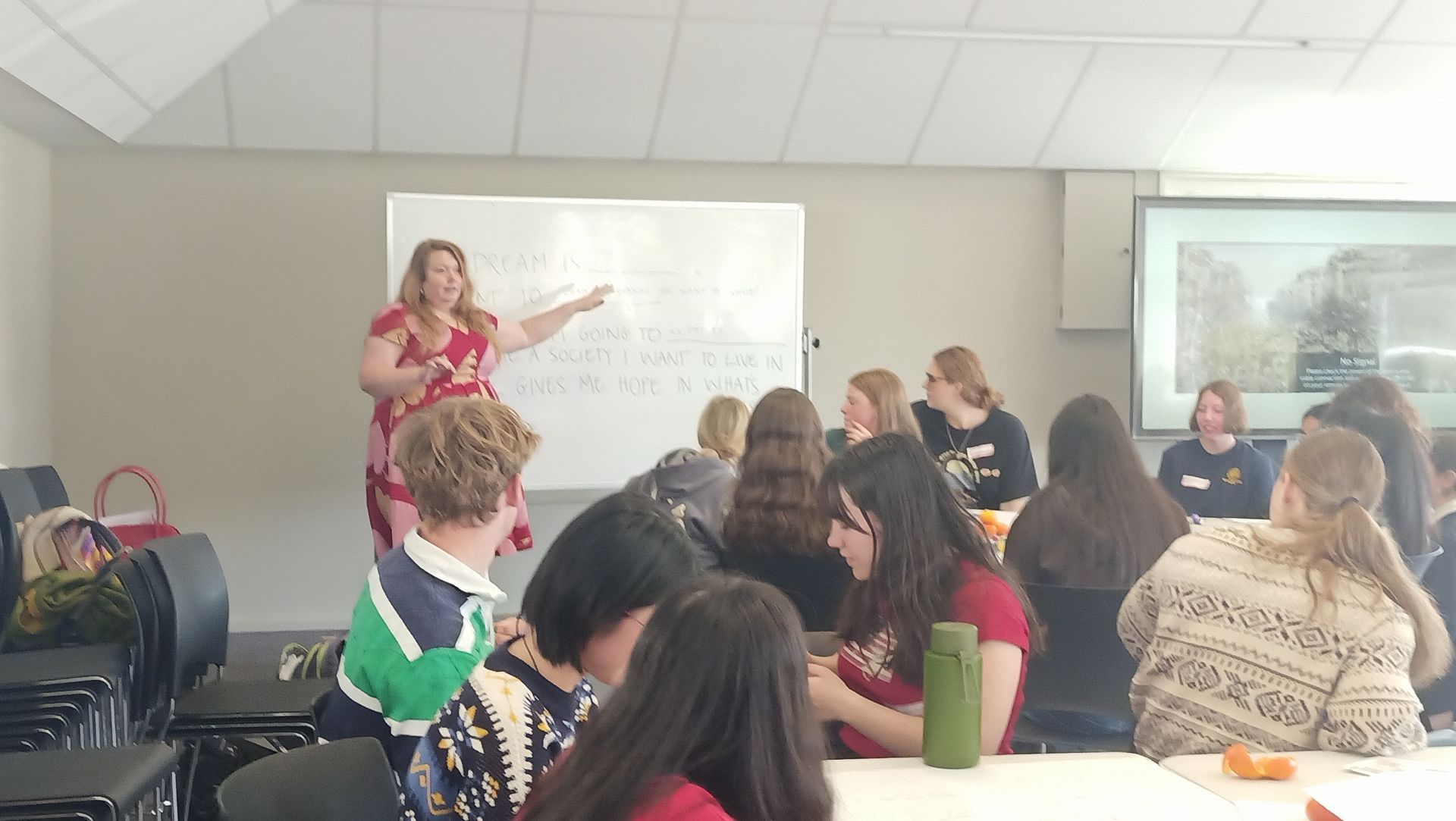
Guest writer, Ngan Dang Member of the co-design committee Journalist in training In 2022, student leaders from St Andrews College and Hillmorton High School, with the guidance of Mahia te Aroha, co-designed the inaugural student hui Our Ōtautahi — Stronger Together on Turangawaewae/belonging. Through inspiring speeches and deep conversations, the first student hui encouraged the young generation to “action compassion” and embrace each other’s similarities and differences. After the event last year, many students acknowledged the need to follow up our discussions on Turangawaewae/belonging with action -- to bring young people together and make our communities more inclusive and welcoming for people of all backgrounds. Seeing this, 5 students from St Andrews College, Hillmorton High School and Rangi Ruru Girls School collaborated to work towards this year's student hui, on October 19th. Throughout the event, akonga and kaiako from various high schools in Waitaha tuned in to thought-provoking speeches, activities, and conversations on Turangawaewae in three aspects: I, We, and Community. Unique to the Waitaha region, rangatahi gain a strong affiliation from their school. This is the basis for many stereotypes and judgments among young people. The student hui aims to break down this specific social barrier between rangatahi from different schools, to spark meaningful connections and collaboration for the future. By making this hui a non-uniform event, we removed a visible label that students tend to focus on when they meet each other. The first focus of the day, "I", encourages students to get to know themselves and others, away from preconceptions. With a speech from Riccarton Ward Councillor Tyla Harrison-Hunt and fun ice-breakers in small groups, students open up to each other and are reminded that we are so much more than what meets the eye. The second focus of the day, "We", sought to enhance the sense of turangawaewae/belonging amongst rangatahi Waitaha. Through the interactive activity "Cross The Line", students learned that they are not alone -- in fact, many people experience the same situations they are going through. Many students agree, during this discussion, that constructive discussions in safe spaces like the student hui are crucial to enhance Turangawaewae/belonging in our communities. The student hui ends on an encouraging note with a focus on "Community", inspiring rangatahi to directly lead the change towards a more welcoming Waitaha. Abraham Larsen, who is an inclusivity advisor for Christchurch City Council, talked about his experiences advocating for inclusivity in different industries. Mahia te Aroha peace educator Alice Andersen led a brainstorming session on the current issues of the community, what rangatahi envision for the future, and how they aim to contribute to an inclusive society. The day concludes with the students making their own pledge and action plan to enhance turangawaewae/belonging in their communities, emphasising the fact that young people have the power to make a positive change in the world every day. The student hui saw young people developing valuable relationships and gaining great insights into different youth perspectives on turangawaewae/belonging in the Waitaha region. It also served as an encouragement for rangatahi to step up to leadership roles, for the betterment of their communities. The student hui highlights the importance and demand to continue the conversation on inclusivity, to ensure that our growing community inherits a welcoming and inclusive world. Filled with hope, compassion and determination, rangatahi came out of this student hui with connections with fellow students across the region, and a plan to contribute towards an inclusive future for Waitaha. With the positive reception and eagerness for more safe spaces for these discussions, we hope to continue this student hui in the future, to fulfill our hopes of connecting and inspiring rangatahi to tackle tough conversations about turangawaewae/belonging in Waitaha.
By Claire Newman November 3, 2021
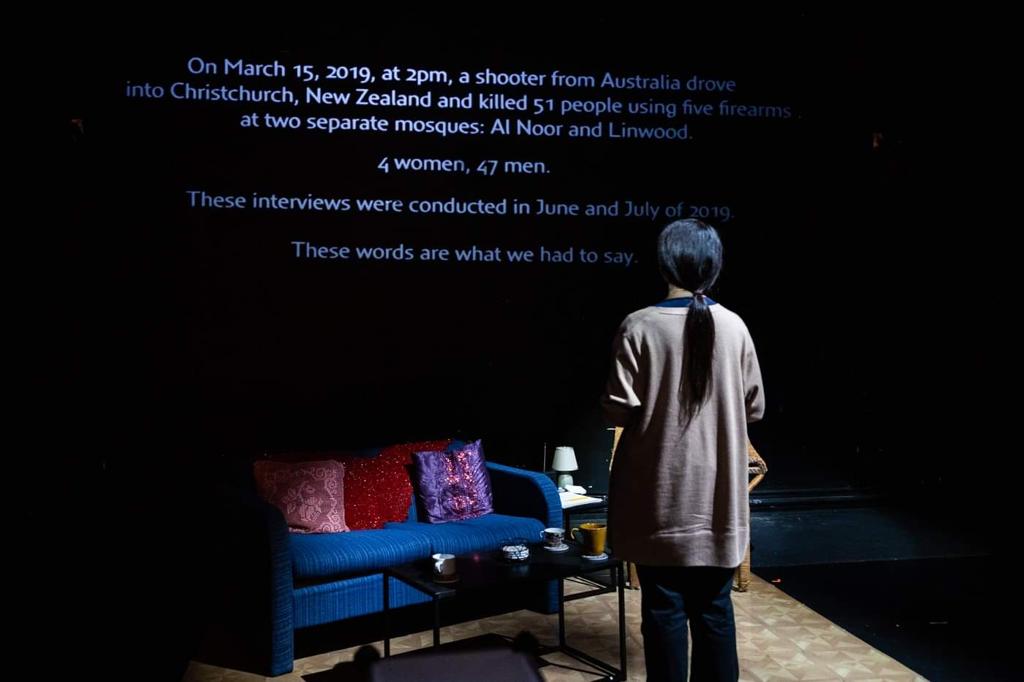
Memorial - the play
By Tony Green November 3, 2021
Social cohesion and a response to the binary. Our MSD submission. 
By Tony Green September 6, 2021
I’ve got a question. It may not seem hugely important, so please forgive me, but it’s been bugging me for some time, even though I’m not Chinese. I’ve been wondering why westerners struggle with Chinese names. And even Korean ones for that matter. And I don’t mean the pronunciation – as a westerner I’ve made feeble attempts to learn Chinese, and I’m guilty of not following it through. It’s a tonal language, so the classic mistake for a westerner married to a Chinese partner and wanting to address their mother in law (first tone, “mā”) is to use the third tone – a ‘down and up’ ‘ma’) and end up calling her a horse. Tonal languages can seem a challenge: Chinese has four tones, Thai has five, and Vietnamese has six. Is it possible to be ‘tone deaf’ in this case: deaf to tones? But no, the struggle I am talking about is not pronunciation – it’s the simple matter of getting the parts of the name in the right order. I read a BBC report of 4,000-year-old noodles being found in a site by the Yellow River by a ‘Professor Houyuan Lu’. Presumably, when his parents named him, he was Lu Houyuan. Did they feel uncomfortable at the time? Did they regret being bound by this tradition and wish it could be the other way around? The co-author of his report was named as Professor Kam-biu Liu, from Louisiana State University, USA. Perhaps he migrated to the USA and the parts of his name got re-arranged in transit. I read a headline that ‘Heung-min Son scores the winner against Arsenal!’ I’m sure his family is pleased that he’s doing well – we all love to see our children succeed. But, again, I wonder at the name: In Korea, surely, it was Son Heung-min: family name first. It’s not a new issue. As part of some work in Singapore I was searching the Internet for old newsreel footage of air travel and I came across the website of a long-defunct company, British Pathé News. A newsreel dated 18 January 1968 was headlined, ‘Mr Lee Arriving at London Airport.’ The late Lee Kuan Yew was a forceful and well-known figure from a small country, but the first line informed people that, ‘Kuan Yew Lee, Prime Minister of Singapore, arrives at London Airport for talks.’ Ah, you may say: that’s over 50 years ago, and they wouldn’t make the same mistake now, but it shouldn’t be so hard. After all, the western world has been engaging with Asia for a long time now. But there’s the question: what has the engagement been like? And on whose terms? Consider this: if the Chinese news media reported that Prime Minister Ardern Jacinda and Foreign Minister Mahuta Nanaia had been on a Zoom call with Australian Prime Minister Morrison Scott, and that they’d discussed issues of trade, might there might be a little ripple of annoyance from western diplomats and media? What’s wrong with you people? Can’t you please get our names right? But so often in western media reports concerning those from other cultures, there is an inability to give the person’s name according to the order, and the frame of respect in the culture they come from. In the USA there was the ‘Wen Ho Lee Case’ in which, it was claimed, a young man had spied for China. Once again, why not ‘Lee Wen Ho,’ with his name as it was given to him by his parents? And this isn’t confined to Chinese and Korean names: take former Malaysian Deputy Prime Minister, Anwar Ibrahim; a man who went through a series of court trials. Should it be Mr Anwar or Mr Ibrahim? Malay names in Malaysia use a patronymic – a father’s name and not a surname. That ought not to be too hard for a global media outfit. Yet, during the period of his times in court, the normally authoritative BBC used both forms at different times. Now, granted, you can't know everything about every culture. Years ago, when the Berlin Wall was still in place and a large chunk of Europe was under Soviet influence, I drove through Poland and Czechoslovakia. I met and spoke with a Hungarian man and gave him a copy of George Orwell's book ‘Animal Farm’ – it was a naïve little gesture against state censorship on my part. He said his name was Balog Gabor – family name first, he informed me, and given name second. And if he hadn’t told me I wouldn’t have known. Despite hearing that Budapest is a beautiful city I had never been there and he was the first Hungarian I had met. So perhaps I may be excused for not knowing how their names ‘worked’. But, meaning no offence against Hungarians, Chinese names ought to be understood. Leaving aside any consideration of the economic power of China (or Korea, or Japan) and the matter of the sheer population numbers, there is the fact that many thousands of Asian students journey to western countries like the USA and Canada and Britain and, by that quirk of cultural geography, ‘western countries’ seems to include Australia and New Zealand – places to the south. Pre-Covid they’ve been contributors to the economy. They fill out application forms for top universities and driving licences and immigration cards and, time and again, they may stumble at the first questions, as they wonder where to write in the parts of their names. What do the terms ‘first name’ and ‘last name’ mean? Or even, occasionally, what does the term ‘Christian name’ mean? And do they feel any annoyance when their names are turned around? Perhaps I’m alone in this, but I wonder if it suggests a small problem of respect. Or, if not that, then an indicator of lack of concern or flexibility? A cavalier attitude towards other people? If so, history could play a part. As a white, English-speaker who came originally from Britain, it seems to me that we have been accustomed, over the last five hundred years, to travelling around the world, telling others that their judiciaries should follow our model, and saying that their cities should be laid out in a certain system, and that, in order for everything to go on smoothly, they must learn our language and adopt many of our ways. If we have that background then we’ve never experienced another, radically different culture land on our shores and make the same demands of us. That’s the history and it can’t be changed, and not everything about it was bad. But at least, for the age we are in, we could recognise the consequences and check our assumptions. If it’s seemed a small issue perhaps we could see that it’s not always helped us develop a very marked ability to listen to others and to accept their ways as being worthy of equal respect. When underlying assumptions are not checked, strange things happen. I remember a General Science examination paper sat by school students in Britain back in the late 1970s when I was teaching in London. One question described a situation and asked the candidates to offer an explanation. It said something like, ‘When you exercise, your skin changes from white to a reddish colour. Explain why this happens.’ We had many families who had originated from the West Indies and one of our pupils, by the name of George Washington Simon (some names you can’t forget), wrote what seemed to me a perfectly reasonable answer to a dumb question: ‘My skin has never been white.’ It wasn't as if, in 1978, people of another skin colour were a new phenomenon in an otherwise all-white Britain yet somehow, only one view had been seen, and this question had slipped through the examining board net. It had not occurred to anyone to reject it. And that same principle of anticipating and accommodating the perspectives of others, of being able to ask how others see the world, is at the heart of effective communication. As I said at the start, this issue of names may seem unimportant, except that the world is now described as ‘globalised’ and it is said that we meet in a different way, to discuss issues. Twisting another person’s name around so that they fit into ‘our’ way of doing things seems an odd way to begin. Anthony Green September 2021
By Tony Green September 5, 2021
Our thoughts, our wishes, our prayers go out to those who were attacked and seriously injured, and to those who have been traumatised by what happened in the Countdown supermarket in New Lynn, Auckland two days ago. We are one nation. We all share that human need to live in peace and to prosper together. Our streets, our schools, the places where we gather to meet, all should be safe from harm. We reject acts of violence and extremism, whatever their claims of justification. We know that those harmed in Auckland will need ongoing support for their healing. Any time that innocent people are attacked – people going about their daily life, intending no harm to others; any time this happens, this calls on the need for us to find a centre of strength. But also, to ask serious questions to work against this happening again. Bill Moyers has said that, “if ever we are to go beyond [hate] we must know it well.” Mahia Te Aroha / The Christchurch Invitation was born out of the Christchurch mosque attacks and by the overwhelming responses that we witnessed. Together we rejected extremism. It is fuelled by hurt and hate. It comes from a troubled place. We know what harm feels like and what a collective drive for compassion can do. We share the responsibility for the actions and education that will work for greater understanding. So whatever led to an act of violence of this nature in Auckland, we turn to these words from The Charter for Compassion, signed by thousands of people from across the world: The principle of compassion lies at the heart of all religious, ethical and spiritual traditions, calling us always to treat all others as we wish to be treated ourselves. Compassion impels us to work tirelessly to alleviate the suffering of our fellow creatures . . . to honour the inviolable sanctity of every single human being, treating everybody, without exception, with absolute justice, equity and respect. It is also necessary in both public and private life to refrain consistently and empathically from inflicting pain. We therefore call upon all men and women . . . to return to the ancient principle that any interpretation of scripture that breeds violence, hatred or disdain is illegitimate . . . Born of our deep interdependence, compassion is essential to human relationships and to a fulfilled humanity. It is the path to enlightenment, and indispensable to the creation of a just economy and a peaceful global community . [The full text is at https://charterforcompassion.org/charter ] Photo credit: Ricky Wilson/ Stuff
By Anthony Green July 28, 2021
The Christchurch Invitation / Mahia te Aroha Keynote Speech – Anthony Green (co-founder, The Christchurch Invitation) 23 July 2021